
Actually, You Don't Necessarily Need a Handmade Sink – Drawn Kitchen Sinks Are Also a Great Choice!
Most kitchen sinks made of stainless steel come in two main types: handmade sinks and drawn sinks. The difference with drawn sinks is that they are formed by using a machine to press and stretch a whole piece of steel plate together with a mold in one operation. The principle is somewhat similar to blowing up a balloon. Because the stretching varies in different areas – for example, the bottom undergoes greater force – the bottom and corners of a drawn kitchen sink become thinner. However, due to advancements in stretching technology nowadays, some stainless steel sink wholesale manufacturers, in order to reduce costs, use increasingly thinner materials, with the thinnest even reaching 0.28mm. Generally speaking, a thickness around 0.8mm is still considered relatively good.
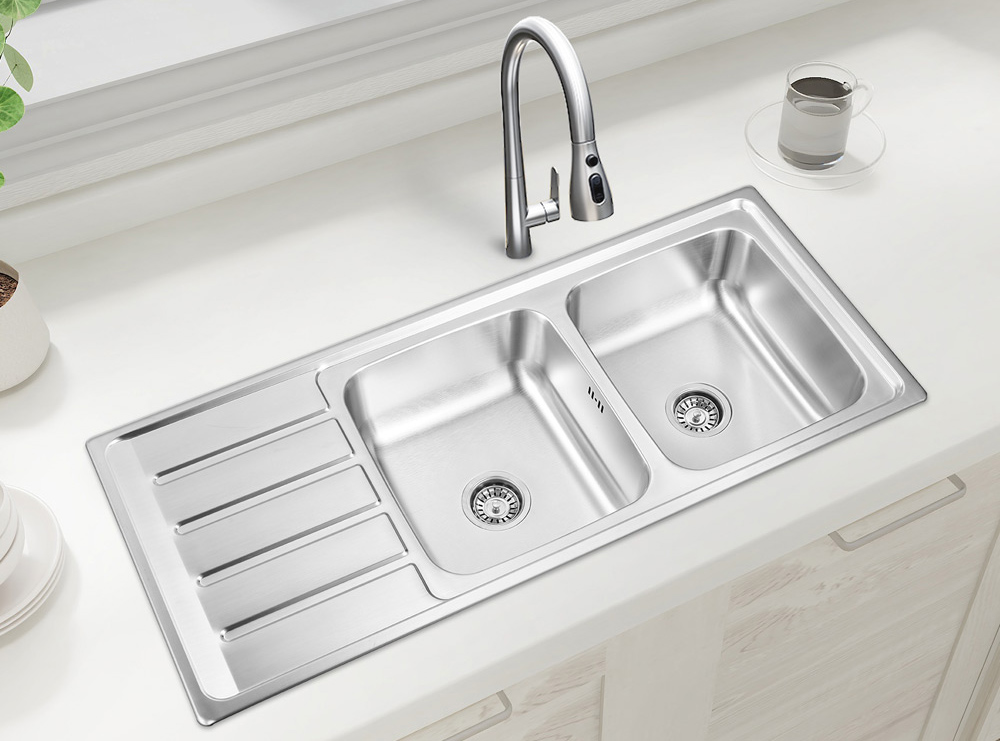
Because drawn kitchen sinks are formed by machine stretching, the corner radii of drawn sinks are relatively large; otherwise, the drawing process would be very difficult, and the scrap rate would be high. Handmade sinks cannot achieve such large corner radii; the maximum is typically an R25 corner.
However, precisely because of the large corner radii of drawn sinks, they become very easy to clean after use. Most importantly, due to the different production processes, even when made from materials of the same thickness as handmade sinks, drawn kitchen sinks are more affordable. Moreover, drawn sinks also have a long service life; they might not break for over a decade. Therefore, many people still choose drawn kitchen sinks for their cost-effectiveness.


