
Granite Composite vs Stainless Steel Sinks: Which Range Should You Carry
Granite composite has quietly become the second pillar of many kitchen ranges, and importers who already carry stainless steel often ask whether it belongs in the container. The answer depends less on the material itself than on the channel you sell into.
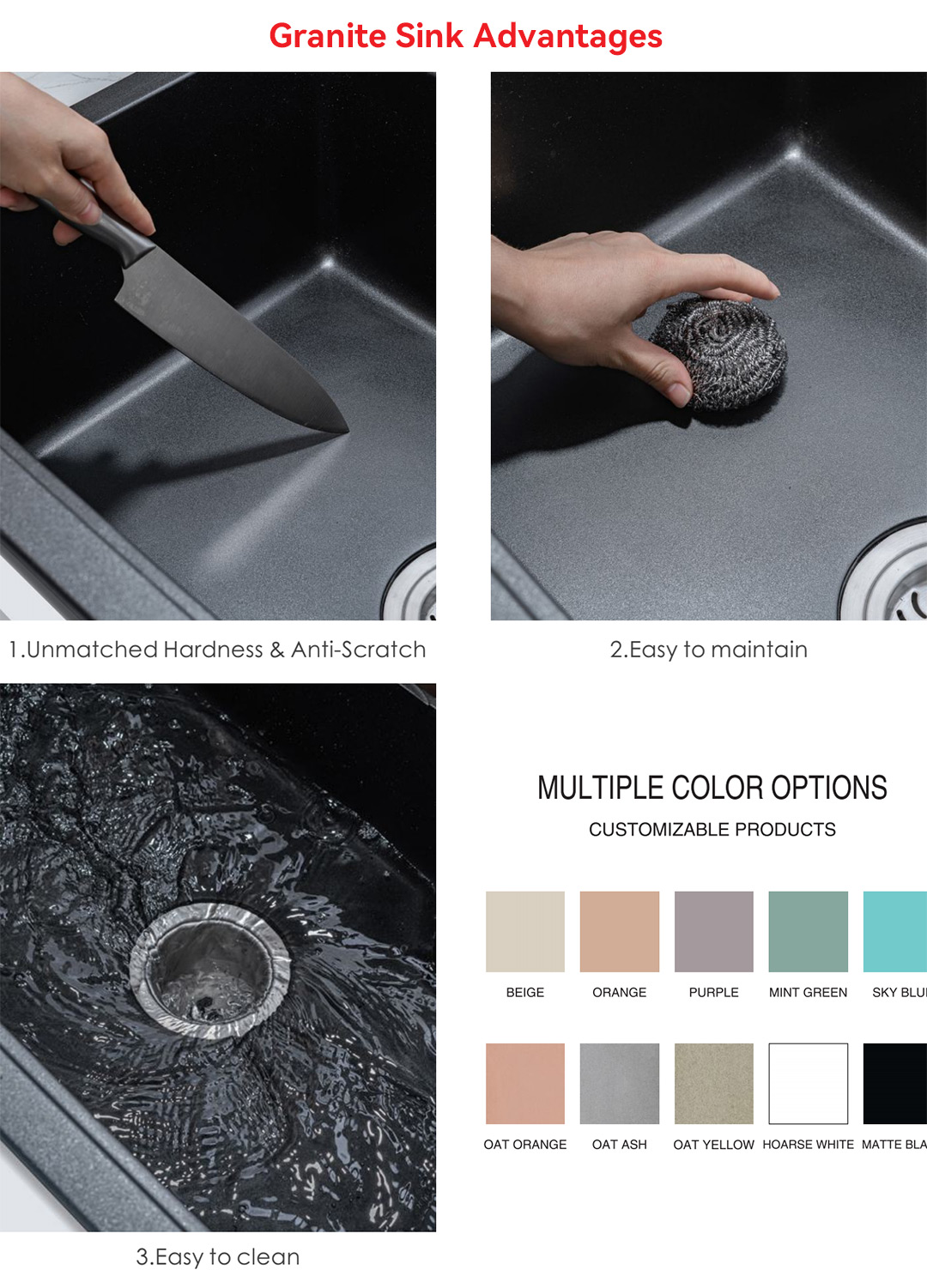
What the material actually is
Granite composite sinks are moulded from a mixture of crushed stone, usually around eighty percent quartz or granite, bound with an acrylic resin. The result is a dense, non-porous body with a matte finish and a uniform colour that runs through the material rather than sitting on the surface. Stainless steel is a formed metal bowl with a surface finish, so the two fail in completely different ways: composite chips or cracks under a heavy impact, stainless steel dents and scratches.
The specification differences that matter commercially
- Weight. A granite composite sink is substantially heavier than a stainless sink of the same size, which changes freight cost per unit and requires more support under the countertop.
- Heat. Hot pans should not be placed directly on a composite sink; stainless steel tolerates it better. This is a customer-expectation issue, not a defect.
- Colour. Composite offers black, grey, white and stone tones that stainless steel cannot match, which is why it sells into design-led kitchens.
- Repair. Surface scuffs on composite can often be sanded out; deep chips cannot. Stainless steel scratches are usually left alone or re-grained.
- Cleaning. Composite resists water spots better; stainless steel hides staining better.
Where each one sells
Stainless steel is the volume material: it dominates new-build kitchen packages, hospitality and the replacement market, and it is the natural choice where price, hygiene and weight matter. Granite composite sells into design-led retail, higher-end renovation and markets where the sink is chosen to match a worktop rather than bought as a utility item. It also sells strongly where cast iron enamel was the traditional choice, because it delivers a similar look at lower weight and cost.
Carrying both: a practical approach
- Use the stainless range for volume and price-led channels; use composite to lift the top of the range.
- Keep the composite footprint smaller - two or three colours rather than a full palette.
- Check the cabinet and countertop requirements before promising installation: composite needs a solid base and, in larger sizes, additional support.
- Include the care instruction card in the carton. Most composite complaints trace back to cleaning products or hot pans rather than to the sink.
Current composite models are listed under granite sinks, and the stainless side of the range under pressed sinks and handmade sinks. Material grades and how to verify them are covered in verifying 304 stainless steel.


