
Analysis of the Handmade Stainless Steel Sink Manufacturing Industry
China's handmade stainless steel sink industry focuses on specialization and customization as its core directions. The following explanation covers three aspects: process technology, typical manufacturers, and selection criteria:
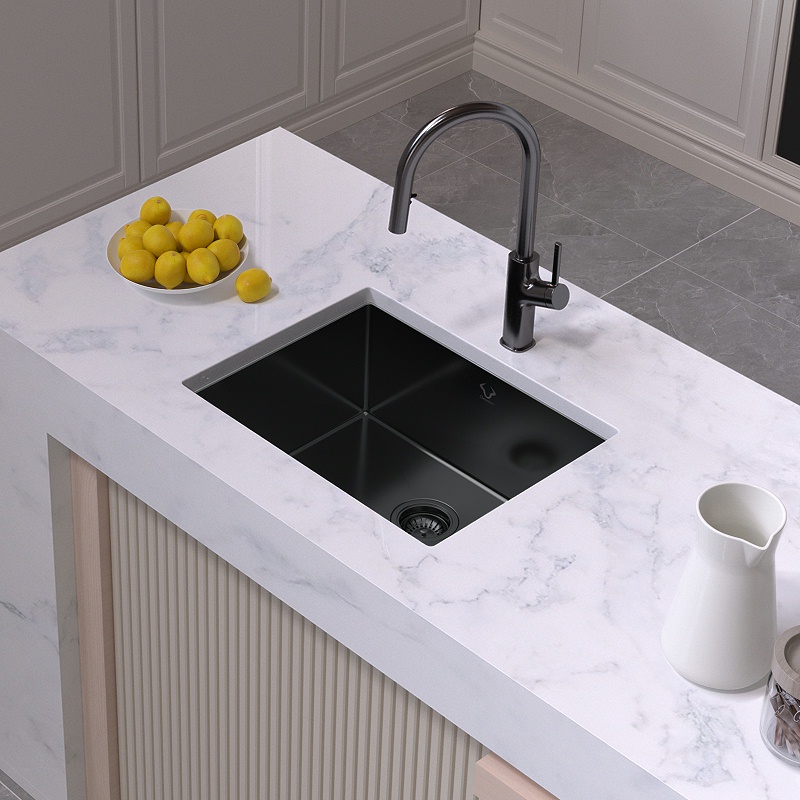
I. Core Process Technology
1. Handcrafted Forging Process: Utilizes a production model combining 3D laser cutting with manual welding. The basin body thickness generally reaches 3.0-5.0mm. Corners are designed with small rounded angles below R10 to reduce dead spots where residue can accumulate. Some companies have introduced multi-layer coating technology to enhance scratch resistance.
2. Material Standards: Leading brands insist on using SUS304 food-grade stainless steel. Some manufacturers equip themselves with magnetic testing tools to verify material purity, ensuring no risk of nickel precipitation.
3. Functional Integration: High-end products come standard with pull-out faucets and double-layer draining baskets. Brands such as TECOOL, kman, and samsink incorporate gravity induction technology for automatic retraction, adapting to different kitchen scenarios.
II. Quality Identification and Purchasing Suggestions
1. Material Verification:
-
Use a magnet to test weak magnetism (a characteristic of 304 stainless steel)
-
Check for laser-printed "SUS304" identification marks
2. Craftsmanship Details:
-
Observe whether welding points are uniform without black spots (manual welding torch temperature needs to be stable at 1500℃)
-
Press the basin body to test rigidity; 5mm thick products should show no deformation
3. Functional Adaptation:
-
For daily use of 3 times or more, recommend 5mm thickened models
-
For small apartments, prefer undermount installation styles (saving countertop space)
Comparing sink manufacturers
Corner radius, welding and finish are the three details that separate one sink factory from another, and all three are visible in the product photography. The current production range is listed under handmade sinks, with dedicated categories for topmount, apron farmhouse and bathroom basin models.


