
Manufacturing Process of Stainless Steel Drawn Sinks
Stainless steel drawn sinks are commonly used in our daily kitchens. But how are they actually made? Now, let TECOOL explain the manufacturing process to you.
1. Blanking (Cutting):
Based on the specifications of the stainless steel sink, the required dimensions of the stainless steel sheet are calculated. A sheet cutter is then used to cut the stainless steel plate to the corresponding size. Generally, the required sheet thickness range is between 0.8-1.0mm. Beyond this range, even a 500T hydraulic press would be ineffective.
2. Drawing (Stretching):
Typically, a high-capacity hydraulic press (500T or above) is used to perform mold drawing on the sheet material. Before the sheet is placed into the mold for drawing, drawing oil is applied to the material. This serves to ensure stable stretching and prevent excessive ductility from causing material rupture or bulging. For difficult, sharp-cornered sinks, annealing treatment must be performed after forming, followed by surface treatment.
3. Mold:
The R-angle (corner radius) of a drawn sink cannot be too sharp. Generally, it should be φ10 or larger, making the structure more suitable.
4. Heat Treatment (Annealing):
For sinks with too small an R-angle (close to a right angle), overall drawing usually requires multiple steps. After each drawing step, high-temperature annealing treatment is necessary, typically at temperatures above 1200℃, to remove the thermal stress generated during drawing.
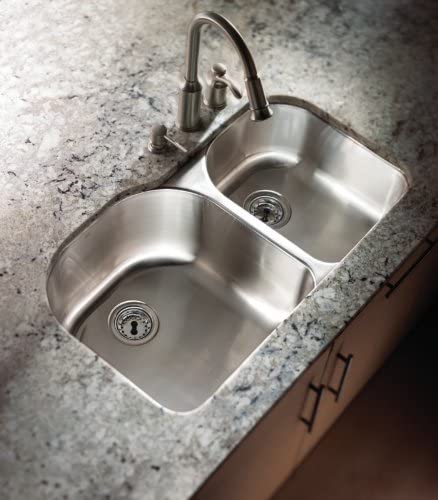
5. Trimming:
Excess edge material around the perimeter is cut into a more standard shape using hardware molds.
6. Sanding (Polishing) Treatment:
Sanding is performed on the inner basin of the stainless steel. The purpose is to improve the smoothness of the surface and enhance the stainless steel grain texture.
7. Polishing (Edge Finishing):
Higher quality sinks undergo polishing on the edges, especially the four corners. The four right angles are rounded to prevent scratching hands.
8. Coating (Typically on the Bottom):
To prevent corrosion and impact damage, high-end handmade sinks usually have a coating applied to the bottom. The coating material is typically waterproof material such as K11 or JS.
Buying drawn sinks directly from the factory
TECOOL produces drawn (pressed) stainless steel sinks in Heshan District, Jiangmen, Guangdong Province, with a monthly capacity of more than 50,000 pieces. The range covers single bowl and double bowl drawn sinks, including the R15 and R25 corner series, in both topmount and undermount specifications, alongside handmade sinks, bathroom basins, faucets and shower products.
Buyers comparing drawn sink suppliers usually start with the product range: browse the pressed (drawn) sink range, the R15 series and the double bowl drawn sinks, then confirm material grade, thickness and packing terms before sampling.
If you are evaluating suppliers rather than the process itself, start with the drawn sink factory guide, which covers the checks that matter when you are comparing quotations.


