
Installing Your Undermount Kitchen Sink Incorrectly Can Lead to Major Headaches Later
Actually, whether it's an undermount kitchen sink or a top-mount kitchen sink, there isn't a strict rule dictating which one must be used. These are just terms created to help people better distinguish between the two installation methods. For example, the same kitchen sink can be installed either as a top-mount or undermount, depending on personal preference. However, today I'm here to briefly analyze the advantages and disadvantages of each, so you can avoid encountering usability issues after your kitchen renovation is complete – and prevent even more (trouble) down the road.
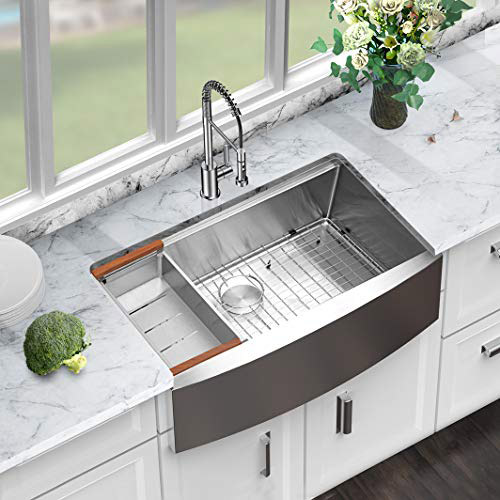
Another phenomenon is that many people inadvertently install an undermount sink as a top-mount sink, which actually increases the installation difficulty. With top-mount sinks, you'll notice that after about six months of use, the silicone sealant starts to grow mold. This is especially noticeable on pristine white countertops and is quite unpleasant to look at. Therefore, it's essential to master the key installation techniques.
Top-mount sinks and undermount sinks are the default installation methods set by kitchen cabinet retailers. Of course, there are also flush-mount sinks, though they are less common nowadays. For top-mount sinks, the sink's rim is larger than the countertop opening. During installation, it's simply placed on the countertop and fixed with silicone sealant. If it breaks, you can remove the silicone and lift it directly off the countertop. When it comes to replacing the kitchen sink later on, this method is indeed much more convenient than undermount sinks.
Kitchen Undermount Sink
Advantages of Top-Mount Sinks:
-
Convenient installation, and later maintenance is also easy if problems arise.
-
The space left inside the cabinet below the sink is about 3cm higher compared to undermount sinks.
Disadvantages of Top-Mount Sinks:
-
Difficult to clean, especially the silicone sealant area, where dirt easily accumulates in the crevices.
-
The silicone sealant is prone to mold and blackening over time, and water can seep through the gaps into the kitchen cabinet.
-
Unsightly appearance. If you buy from a reputable stainless steel sink manufacturer, some provide a cutting template, which helps protect the sink from scratches during installation. However, many stone countertop fabricators don't use templates; they often place the sink directly on the countertop to mark the cutout. This process is messy, environmentally unfriendly, lacks precision, doesn't look good, and can easily lead to countertop cracking.
Flush-Mount Sinks (Also Called Flat-Mount or Tile-In Sinks):
This method involves grinding down a layer of the countertop to match the thickness of the sink's rim, so the sink sits flush with the countertop surface.
Advantages:
-
The sink is level with the countertop, making cleaning relatively easier.
Disadvantages:
-
The installation process is the most complex and requires high-level craftsmanship.
-
Increases the cost due to the grinding/polishing work.
-
The gap between the sink and countertop can become a dirt trap, easily breeding bacteria.
Kitchen Undermount Sink
Undermount Sinks are characterized by the sink rim being installed beneath the countertop surface, so only the basin itself is visible.
Advantages:
-
Undermount sinks are very easy to clean. Water, food scraps, and vegetable leaves on the countertop can be wiped directly into the sink with a simple sweep.
-
The overall look is sleek, minimalist, and elegant, seamlessly integrating with the countertop.
Disadvantages:
-
Relatively speaking, undermount sink installation is more troublesome. The sink must be mounted underneath the countertop, requiring precise cutting of the countertop opening to match the sink's inner dimensions. The gap is sealed with adhesive and secured with mounting clips.
-
Installation costs are higher than top-mount sinks, similar to flush-mount sinks.
Regarding the Load-Bearing Capacity of Undermount Sinks:
Although top-mount sinks have many benefits, the load-bearing capacity of undermount sinks has always been a concern for many people. In reality, there's no need to worry. The material of stainless steel kitchen sinks isn't as heavy as ceramic or quartz sinks. Moreover, most people only fill the undermount sink with some water for daily use; it's unlikely that extremely heavy objects will be placed inside the basin. Therefore, there is absolutely no issue with daily usage.


