
Drawn Sink Corner Radii: R10, R15, R25 and R30 Explained
Corner radius is one of the few specifications that changes both how a sink looks and how a factory has to make it. Buyers ask about R10, R15, R25 and R30 constantly, often without a clear picture of what the number controls or what it costs to change. Here is the practical version.
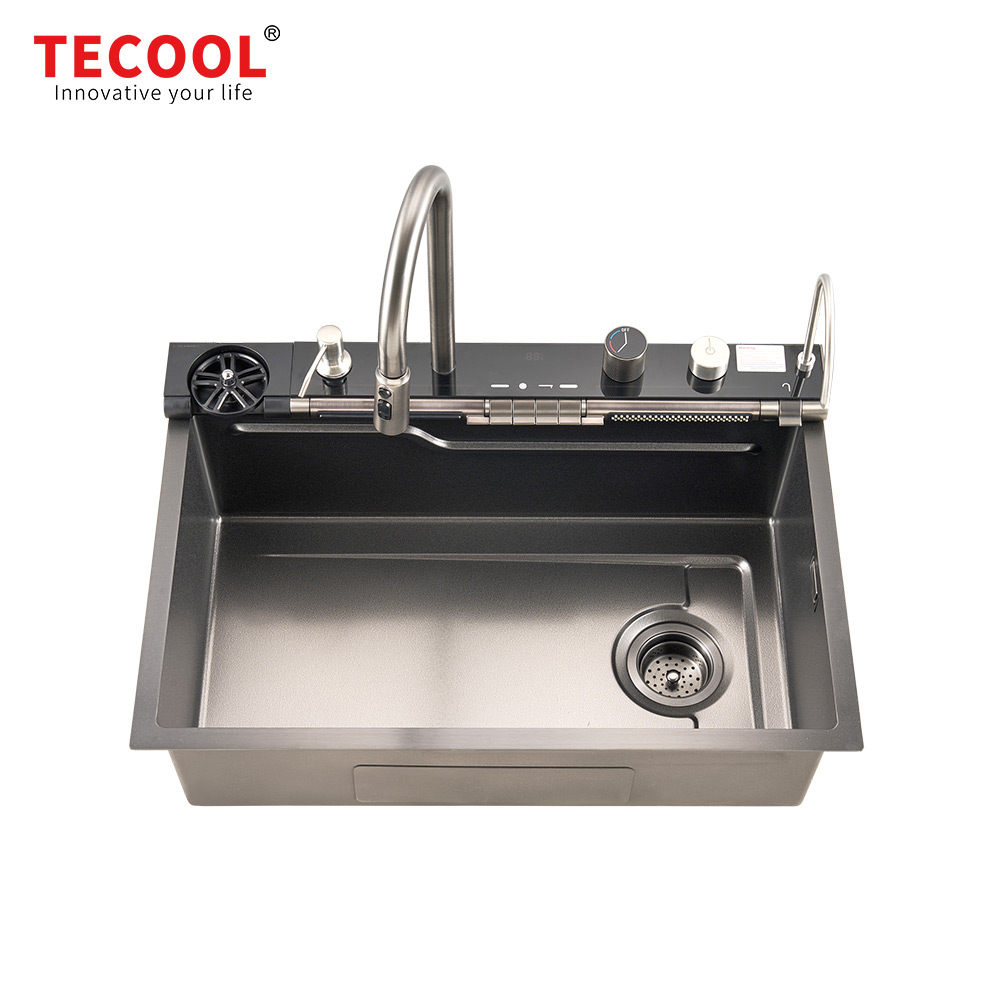
What the radius actually measures
The radius describes the curve where the bottom of the bowl meets the side wall. A smaller number means a tighter, more angular corner; a larger number means a softer, rounder transition. R10 is a 10 mm radius, R25 is 25 mm, and so on.
Why buyers care
- Cleaning. Tighter corners trap less debris and are easier to wipe out, which is why R10 and R15 have become the default request in mid and high-end kitchens.
- Usable volume. A tighter corner gives slightly more usable bowl area for the same overall footprint.
- Appearance. Rounder corners read as softer and more traditional; tighter corners read as modern.
Why the factory cares
Radius is a tooling decision. A drawn sink is formed over a die, so each radius needs its own tooling, and the tighter the radius the harder the steel has to be worked during the press stroke. That is why a factory will usually offer a small number of standard radii rather than any number a customer names, and why a new radius usually means a tooling investment and a minimum quantity to justify it. Handmade (welded) sinks are more flexible here, because the corner is formed by bending and welding rather than by a die.
The radii in practice
In the market as a whole, R10 and R15 are the common requests for modern kitchens, R20 and R25 sit in the middle, and R30 gives a noticeably rounded corner that suits traditional or commercial kitchens. TEGAO produces both the R15 series and the R25 series in drawn sinks, and tighter radii are available in the handmade range where the corner is not limited by a die.
How to specify it on an order
- State the radius in millimetres, not just as "square" or "round".
- Confirm the radius applies to the bowl corner, and check whether the drain area is pressed or welded.
- Ask for a production sample before the full order when the radius is new to the supplier, because the difference between R10 and R15 is easy to see in a photograph and hard to describe in an email.
- Check the radius against the accessories you plan to sell, especially where a cutting board or rack has to sit flush.
What this means when you are comparing quotes
Two quotations that look identical in price can differ entirely in radius and tooling ownership. Ask whether the tooling exists, who owns it, and what happens to the price if you later switch to a different radius. For a standard model in current production, such as the H-12053USM-VSV or the H-10053USM, there is nothing to invest and the radius is fixed by the existing die.
Next step
If you are specifying a sink programme and need a particular radius, send the requirement with your target quantity and destination market, and TEGAO will confirm whether it is available from existing tooling, or what tooling and minimum quantity a new radius would require. Start from the pressed sink range or use the contact page.


